
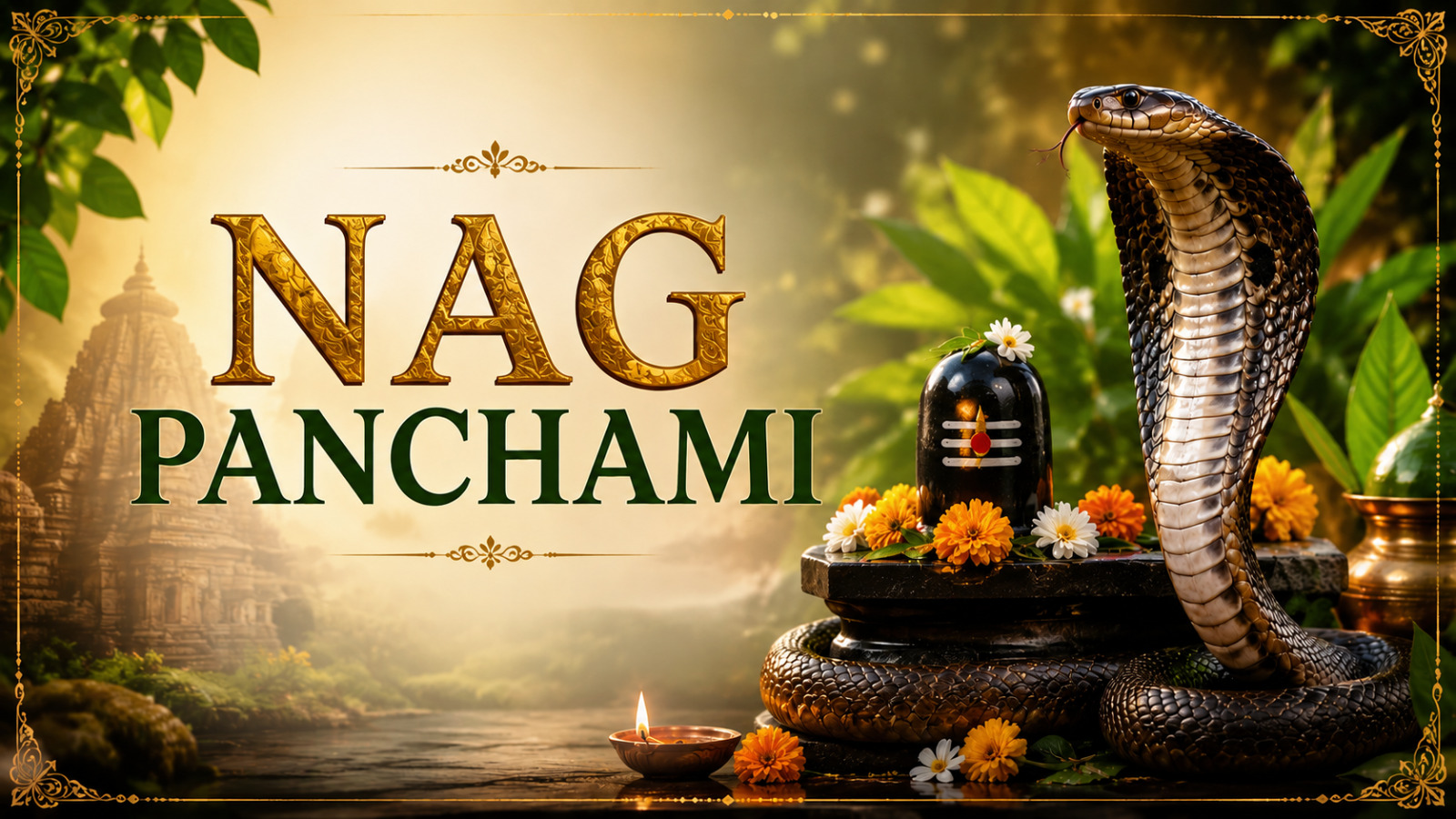
Nag Panchami 2026: The Grand Festival of Worshipping Lord Shiva's Ornament, the Serpent God – Know Dates, Muhurat, and Powerful Remedies
The month of Sawan is underway, and the atmosphere is thoroughly energized with lush greenery, devotion to Lord Shiva, and the resonance of conch shells and temple bells. In this sacred month, the fifth day (Panchami Tithi) of the Shukla Paksha holds profound spiritual significance, celebrated as Nag Panchami. In Sanatan culture, serpents are considered not merely creatures, but divine entities and ornaments of Lord Shiva, the sustainer of the universe.
From a Vedic astrology perspective, worshipping the serpent deities on this day not only alleviates various life crises but also frees individuals from malefic planetary afflictions (doshas) in their birth charts. If you seek peace, prosperity, and security in your life, this auspicious festival of Nag Panchami can prove exceptionally fruitful. Let us explore the exact date, auspicious puja timings (muhurat), ritual procedures, and astrological significance of Nag Panchami 2026 from the perspective of an experienced astrologer.
Nag Panchami 2026 Date and Panchang Details
According to astronomical calculations, the festival of Nag Panchami is celebrated every year on the Shukla Paksha Panchami tithi of the Sawan month. The exact details for the year 2026 are provided in the Panchang table below:
| Panchang Details | Description |
| Festival Name | Nag Panchami 2026 |
| Month & Paksha | Sawan Month, Shukla Paksha |
| Tithi Begins | As per Panchang start time |
| Tithi Ends | As per Panchang end time |
| Main Puja Date | Specific Sawan Shukla Panchami 2026 |
Nag Panchami Puja Auspicious Muhurat (Shubh Muhurat)
In astrology, selecting the right time (Shubh Muhurat) is considered essential for the complete success of any ritual. The following timings are deemed most optimal for worshipping the serpent deities on Nag Panchami:
Total Puja Duration: An auspicious morning muhurat lasting more than 2 hours and 30 minutes.
Special Advice: According to astrological rules, Nag Panchami puja should always be performed after sunrise and during morning stable ascendants (sthir lagna). This prevents negative energy from entering the household and enhances positivity.
Religious and Astrological Significance of Nag Panchami
Our ancient scriptures praise the glory of serpents, describing them as the lords of Patala Loka (netherworld) and the stabilizing force of the Earth. From the life of Lord Sri Krishna to the matted locks of Lord Shiva, the association of serpents symbolizes the vital balance required between nature and living beings.
The astrological significance of Nag Panchami is heightened due to the following factors:
Kaal Sarp Dosh Remedies: For individuals whose birth charts suffer from Kaal Sarp Dosh—formed when all planets are hemmed between Rahu and Ketu—Nag Panchami offers the ultimate opportunity to pacify its malefic effects.
Freedom from Serpent Afflictions (Sarp Dosh): The presence of a serpent curse in the horoscope causes sudden obstacles, career roadblocks, and persistent health issues. Performing rituals methodically on this day mitigates these hurdles.
Family Protection: It is believed that worshipping the serpent god with a sincere heart on Nag Panchami protects one's entire family from the fear of snakes and invites happiness and prosperity into the home.
Complete Ritual Procedure for Nag Panchami (Puja Vidhi)
As an astrological practitioner, I always recommend that any ritual yields hundred-percent results when performed with total devotion, discipline, and correct procedures. You should perform the puja on Nag Panchami in the following manner:
Morning Purification: Wake up early, take a bath, and wear clean clothes. Take a formal pledge (sankalp) for the fast and puja.
Sanctifying the Puja Area: Thoroughly clean your home temple and purify it by sprinkling sacred Gangajal.
Establishing the Serpent Deities: Draw depictions of the nine serpent forms—Ananta, Vasuki, Sesha, Padma, Kambala, Karkotaka, Aswatara, Dhritarashtra, and Shankhapala—using cow dung or geru (red ochre) on a wall, or install idols/pictures made of silver, copper, or paper.
Shodashopachara Worship: Offer turmeric, vermilion (roli), unbroken rice grains (akshat), flowers, and specifically durva grass to the serpent deities.
Offering Prasad (Naivedya and Milk): Present raw milk, ghee, sugar, and sweets to the serpent gods. In many regions, special dishes like sewai (vermicelli) and kheer (rice pudding) are offered as prasad.
Mantra Chanting: Recite the seed mantras (bija mantras) of the serpent deities for at least one complete rosary round during the puja.
Powerful Astrological Remedies for Kaal Sarp Dosh
If you are struggling in life due to Kaal Sarp Dosh in your horoscope, make sure to try these remedies on Nag Panchami:
Silver Pair of Serpents: Under the guidance of a qualified priest, commission a silver pair of male and female serpents (Nag-Nagin), worship them methodically, and offer them to a Shiva temple or immerse them in flowing water.
Rudrabhishek: Perform Rudrabhishek of Lord Shiva using sugarcane juice or pure water on Nag Panchami while chanting the Maha Mrityunjaya Mantra with proper rituals.
Charity and Protection of Life: Donate food and essentials to the needy on this day. Never harm any animal or snake; instead, take a pledge to protect them.
Conclusion
The sacred festival of Nag Panchami is not merely a religious ritual, but a reflection of a culture that teaches love and respect for nature and wildlife. When we worship the serpent deities, we reaffirm our commitment to environmental balance and Sanatan faith. Perform your prayers this Nag Panchami with utmost devotion and positivity, and the blessings of the serpent god and Mahadeva will undoubtedly remove all obstacles from your path and pave the way for happiness and prosperity.