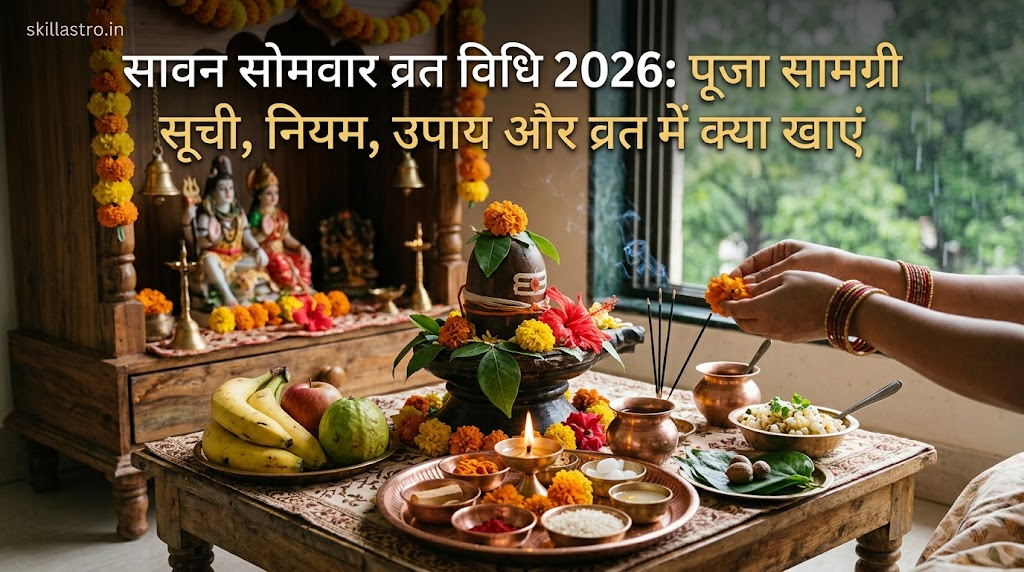
Sawan Somwar Vrat: Complete Puja Vidhi, Samagri List, Rules, Fasting Diet, and Effective Remedies to Please Lord Shiva
In Sanatan Dharma, the month of Sawan (Shravan) is considered extremely sacred and auspicious. This entire month is dedicated to Mahadev, the Lord of Lords, Lord Shiva. According to popular belief, Goddess Parvati performed severe penance during the month of Sawan to get Lord Shiva as her husband. That is why devotees who observe the Sawan Somwar (Monday) fast and worship Bholenath with a pure heart get all their wishes fulfilled, overcome marriage obstacles, and attract peace and prosperity into their lives.
If you are keeping this fast for the first time or want to know the correct worship procedure, this detailed guide is for you. Here you will find complete information regarding Sawan Somwar Vrat in one place.
1. Essential Samagri List for Sawan Somwar Puja (Puja Items List)
Gather all necessary items before starting the puja to avoid any interruptions. You can divide the items into three categories:
(a) Items for Shivling Abhishekam:
Pure water and Gangajal
Raw cow's milk
Fresh curd (yogurt)
Pure desi ghee
Honey
Sugar or Mishri (Rock sugar)
(Combining these five creates Panchamrit)
(b) Sacred Offerings, Leaves, and Flowers:
Belpatra (Bael leaves): At least 3, 11, 21, or 108 (Ensure the leaves are intact and have three leaflets together)
Dhatura and Bhang: Highly dear to Lord Shiva
Aak (Crown flower/Madar) flowers: White or purple
Shami leaves: To get relief from Shani Dosh and afflictions
Kaner (Oleander) and Lotus flowers: For joy and prosperity
(c) Adornment and Other Items:
White or yellow Sandalwood paste (Chandan), Bhasma (sacred ash), Akshat (unbroken rice grains), Mauli (sacred thread), Janeu (sacred thread), Incense sticks (Dhoopbatti), Camphor (Kapoor), Desi ghee lamp (Diya), Matches, Seasonal fruits (Banana, Apple, Pomegranate), Sweets, and Dry fruits (Panchmeva).
2. Simple and Accurate Step-by-Step Puja Vidhi for Sawan Somwar
Here is the correct method to perform the puja at home or in a temple on a Sawan Monday:
Morning Bath and Vow (Sankalp): Wake up during Brahma Muhurta (early morning) and clean your home. Add a few drops of Gangajal to your bathwater and take a bath. Wear clean clothes (preferably white or green). Take water and rice in your hand to make the vow (Sankalp) for the fast.
Jalabhishekam of Shivling: First, offer pure water and Gangajal on the Shivling using a copper or brass vessel.
Panchamrit Abhishekam: Next, perform the Abhishekam with Panchamrit (a mix of milk, curd, ghee, honey, and sugar). Continuously chant the mantra 'Om Namah Shivaya' during the process.
Cleanse with Pure Water: After offering Panchamrit, pour pure water and Gangajal over the Shivling again to clean it thoroughly.
Shrungar (Adornment) and Offerings: Apply a Tripundra of sandalwood paste on the Shivling. Offer Akshat, Bhasma, Janeu, and Mauli. Then offer Belpatra (with 'Ram' or 'Om' written using sandalwood), Bhang, Dhatura, Aak flowers, and Shami leaves.
Dhoop-Deep and Bhog: Light incense sticks and a ghee lamp. Offer fruits, sweets, and makhana (foxnuts) to Lord Shiva and Goddess Parvati as Bhog.
Katha and Mantra Chanting: Read or listen to the Sawan Somwar Vrat Katha. After that, chant the Mahamrityunjaya Mantra or 'Om Namah Shivaya' at least 108 times.
Aarti and Seeking Forgiveness: Finally, light camphor and perform Lord Shiva's Aarti. Pray to God seeking forgiveness for any unintentional mistakes made during the puja.
3. Strict Rules of Sawan Somwar Vrat: Do's and Don'ts
Following the rules is just as important as performing the puja during the holy month of Sawan.
Do's:
Keep your mind calm throughout the day and maintain pure (Sattvik) thoughts.
Respect elders, parents, and women at home.
Consume Sattvik fasting food (Falahar) in the evening only after performing the evening Aarti.
Donate food or water to the hungry, poor, and needy.
Don'ts:
Do Not Offer Turmeric (Haldi): The Shivling represents the masculine principle while turmeric is associated with feminine beauty; hence, turmeric should never be offered to a Shivling.
Avoid Ketaki and Tulsi Leaves: According to mythology, offering Ketaki flowers and Tulsi (Holy Basil) leaves in Lord Shiva's worship is forbidden.
Avoid Tamasik Food: Refrain completely from onions, garlic, meat, alcohol, eggs, and intoxicants during the entire month of Sawan.
Avoid Brinjal (Eggplant) and Leafy Greens: Brinjal and certain green leafy vegetables are prone to insect infestation during Sawan, which is why both Ayurveda and scriptures advise avoiding them.
Avoid Anger and Arguments: Do not lose your temper or engage in backbiting or badmouthing anyone on the fasting day.
4. What to Eat and What to Avoid During Sawan Fasting? (Fasting Diet Chart)
It is crucial to choose the right diet to maintain energy levels during the fast.
| Allowed Foods (What to Eat) | Avoid Foods (What NOT to Eat) |
| Fresh fruits (Banana, Apple, Pomegranate, Orange) | Wheat, Rice, Gram flour (Besan), Semolina (Suji), and Refined flour (Maida) |
| Sabudana (Tapioca pearls - Khichdi, Vada, or Kheer) | Regular table salt (Use Sendha Namak / Rock Salt only) |
| Buckwheat (Kuttu) or Water Chestnut (Singhara) flour bread/puri | Onions, Garlic, and heavy spices |
| Boiled potatoes, Colocasia (Arbi), and Pumpkin | Packaged junk food and canned juices |
| Milk, Curd, Buttermilk, Makhana, Peanuts, Almonds | Red chili powder and Mustard seeds |
5. 5 Effective Remedies (Upay) to Please Lord Shiva in Sawan
For Early Marriage: Write 'Ram' with yellow sandalwood on 108 Belpatra leaves on Sawan Monday and offer them one by one onto the Shivling.
To Overcome Financial Troubles and Debts: Add a few black sesame seeds and raw milk to water, and perform Abhishekam on the Shivling.
For Good Health and Disease Prevention: Offer water from a copper vessel to the Shivling daily and chant the Mahamrityunjaya Mantra 108 times.
For Mental Peace and Stress Relief: Offer milk mixed with mishri (sugar candy) on the Shivling on Mondays.
For Desiring a Child: Prepare 11 Shivlings out of wheat flour dough during Sawan, worship them, and later immerse them in a river or pond.
Conclusion
The month of Sawan is not just a religious festival, but a sacred time to eliminate inner negativity and gain positive energy. If you observe the Sawan Somwar fast with a pure heart, sincere mind, and devotion to worship Bholenath, Lord Shiva never lets His devotees return empty-handed.