

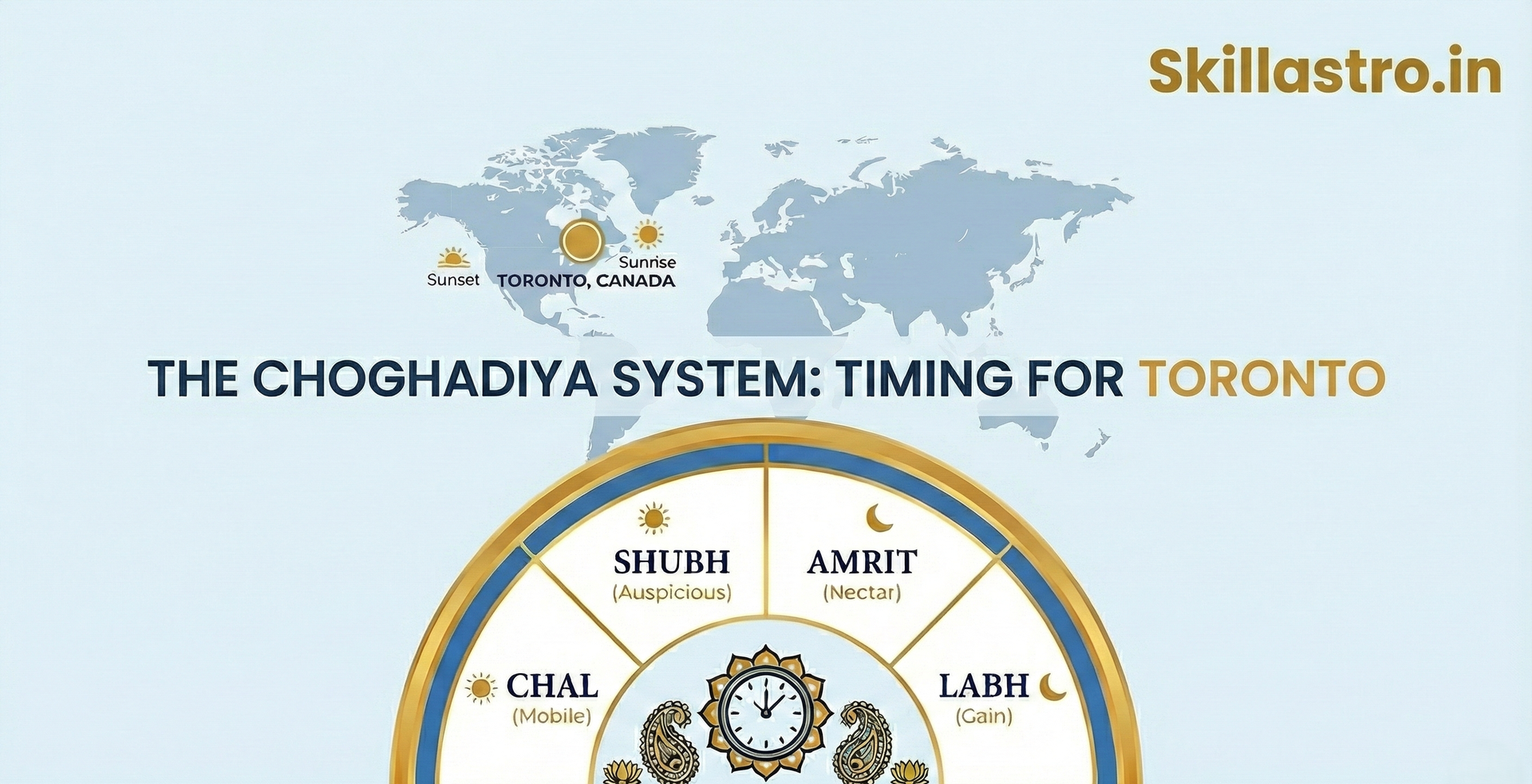
What is Choghadiya and its ancient Vedic origins
Choghadiya represents one of the most sophisticated timing systems from ancient India, rooted in Vedic astrology and astronomy. The word itself comes from Sanskrit, where "Chogha" means four and "diya" refers to a measure of time. This system divides each day and night into eight distinct time periods, each lasting approximately 90 minutes and governed by different planetary influences.
Ancient sages developed this system after observing how celestial bodies affect human activities and outcomes. They noticed that certain times naturally supported specific endeavors while others created obstacles or delays. The seven classical planets - Sun, Moon, Mars, Mercury, Jupiter, Venus, and Saturn - each rule different Choghadiya periods, bringing their unique energies and characteristics to those time slots.
Each planet carries distinct qualities: the Sun brings authority and success, the Moon offers intuition and creativity, Mars provides energy and action, Mercury supports communication and learning, Jupiter favors wisdom and expansion, Venus enhances relationships and beauty, while Saturn demands patience and careful planning. The eighth period, called Rahu, is considered highly inauspicious and traditionally avoided for important activities.
This ancient wisdom recognizes that time itself has quality, not just quantity. Rather than treating all hours equally, Choghadiya acknowledges that cosmic rhythms create windows of opportunity and challenge throughout each day.
Toronto choghadiya
Toronto's unique geographical position at 43.6532° North latitude and 79.3832° West longitude creates specific Choghadiya timings that differ from other cities worldwide. The system calculates periods based on local sunrise and sunset, meaning Toronto residents experience distinct timing patterns that shift throughout the year as daylight hours change.
During Toronto's long summer days, when sunrise occurs around 5:30 AM and sunset near 8:30 PM, each Choghadiya period extends longer than during winter months when daylight spans from approximately 7:30 AM to 5:00 PM. This seasonal variation means that a favorable morning Choghadiya in July might last until 7:00 AM, while the same period in December could end by 9:00 AM.
The city's position in the Eastern Time Zone also affects how these ancient calculations translate to modern schedules. Business hours, school timings, and social activities in Toronto align differently with auspicious periods compared to cities in other time zones or latitudes.
Toronto's multicultural population, including a significant South Asian community, has maintained strong connections to Vedic traditions, making accurate local Choghadiya calculations particularly valuable. Many families plan weddings, business launches, property purchases, and other significant events according to these timings, adapting ancient wisdom to contemporary Canadian life.
Weather patterns unique to Toronto, including lake effects from Lake Ontario, can influence how planetary energies manifest, though the core timing structure remains consistent with astronomical calculations.
How planetary movements influence daily timing
Planetary positions create an invisible framework that shapes the energy quality of different time periods throughout each day. As planets move through their orbits, their gravitational and electromagnetic influences create subtle but measurable effects on Earth's environment and, according to Vedic tradition, human consciousness and decision-making abilities.
Each planet rules specific Choghadiya periods in a predetermined sequence that repeats daily. The Sun's period brings clarity, confidence, and leadership energy, making it ideal for important meetings, presentations, or launching new projects. Moon periods enhance intuition, emotional healing, and creative activities like writing, painting, or meditation.
Mars periods energize physical activities, sports, competitive endeavors, and situations requiring courage or quick action. Mercury periods favor communication, learning, travel, and intellectual pursuits. Students often find studying during Mercury Choghadiya particularly effective for retention and understanding.
Jupiter periods support spiritual activities, education, legal matters, and decisions requiring wisdom and good judgment. Venus periods enhance relationships, artistic endeavors, beauty treatments, and social gatherings. Saturn periods, while often challenging, support disciplined work, research, and activities requiring patience and persistence.
The interplay between these planetary influences and individual birth charts can create personalized patterns of favorable and challenging times. Someone born under strong Mars influence might find Mars Choghadiya periods particularly productive, while Venus-dominant individuals may thrive during Venus periods.
Why location-specific calculations matter for accuracy
Choghadiya calculations depend entirely on local sunrise and sunset times, making geographical precision essential for accurate timing. A generic Choghadiya chart created for Delhi or Mumbai cannot provide correct timings for Toronto residents, as the astronomical calculations would be completely wrong.
Toronto's latitude of approximately 43.65° North creates significant seasonal variations in daylight hours. Summer solstice brings nearly 16 hours of daylight, while winter solstice provides only about 9 hours. This dramatic range means Choghadiya periods stretch and contract considerably throughout the year, with summer periods lasting nearly twice as long as winter periods.
The city's longitude of 79.38° West determines the exact local solar time, which differs from standard Eastern Time due to Toronto's position within the time zone. True local sunrise and sunset times vary from clock time, especially during daylight saving periods, affecting the precise start and end of each Choghadiya period.
Elevation changes within the Greater Toronto Area also create minor variations in sunrise and sunset visibility. Residents in downtown high-rises experience different timing than those in suburban areas or near the lakefront. Professional astrologers often account for these micro-variations when providing personalized Choghadiya recommendations.
Using incorrect location data can shift all periods by 30-60 minutes or more, potentially causing someone to act during an inauspicious time while believing they're following favorable timing.
Benefits of following auspicious timing in modern life
Modern Toronto residents who incorporate Choghadiya principles often report improved outcomes in various life areas. Business owners find that launching products, signing contracts, or making important announcements during favorable periods leads to better reception and smoother implementation.
Students and professionals discover that scheduling important exams, job interviews, or presentations during auspicious Choghadiya periods enhances their confidence and performance. The psychological effect of feeling aligned with cosmic rhythms often translates into reduced anxiety and increased focus.
Relationship timing benefits include planning marriage proposals, important conversations, or family gatherings during Venus or Jupiter periods. Many couples report that dates and celebrations held during favorable timings feel more harmonious and memorable.
Health and wellness activities also benefit from proper timing. Medical procedures, therapy sessions, or starting new fitness routines during appropriate periods often yield better results and fewer complications.
Financial decisions like investments, property purchases, or major purchases made during favorable periods tend to work out more beneficially over time. While Choghadiya doesn't guarantee success, it provides a framework for optimizing timing when other factors are already favorable.
The practice also cultivates mindfulness and intentionality about daily activities. Rather than rushing through tasks randomly, followers develop awareness of natural rhythms and learn to work with cosmic energies rather than against them, leading to a more balanced and purposeful lifestyle.