 Join WhatsApp Channel
Navratri 2026 Day 1: Auspicious Muhurat, Puja Samagri, and Method
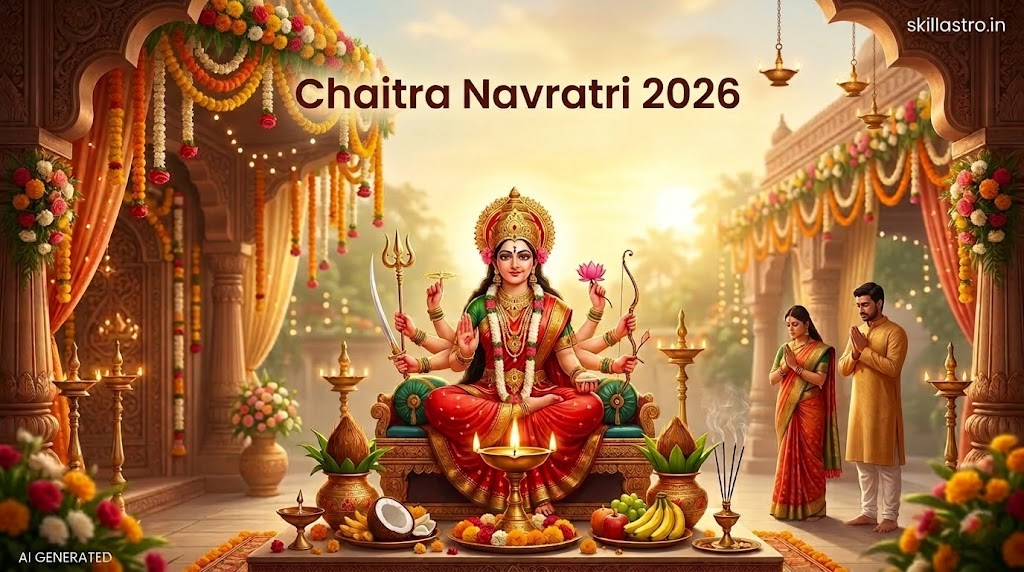
In the Sanatan tradition, the festival of Navratri is the greatest celebration of energy, power, and spiritual awakening. In the year 2026, the holy festival of Chaitra Navratri is starting on Thursday, March 19. The first day of Navratri is dedicated to the first form of Goddess Durga, 'Maa Shailputri'. On this very day, the sacred Kalash is established (Ghatasthapana), which is the main foundation of this nine-day-long ritual of power. The full fruit of any worship is attained only when it is performed at the right Muhurat, with the right materials, and according to the scriptural method. Let us know the exact Muhurat for the first day of Navratri, the essential Puja materials, and the worship method of Maa Shailputri.
The Exact Auspicious Muhurat for Kalash Sthapana (Ghatasthapana)
Navratri begins with the Kalash Sthapana on the day of Chaitra Shukla Pratipada. This year, the auspicious time for Kalash Sthapana according to the Panchang will be as follows:
Pratipada Tithi Begins: March 19, 2026, at 06:52 AM
Pratipada Tithi Ends: March 20, 2026, at 04:52 AM
Morning Kalash Sthapana Muhurat: March 19, from 06:52 AM to 07:43 AM
Abhijit Muhurat (Auspicious Afternoon Time): March 19, from 12:05 PM to 12:53 PM
(Special Note: Ghatasthapana should always be done during an auspicious Muhurat; this brings positive energy and the presence of the Goddess into the house.)
Talk to India's Best Astrologer at ₹1/min Only
Expert guidance for Career, Love & Marriage. Get accurate predictions instantly from verified Vedic Astrologers.
Chat Now »
Talk to India's Best Astrologer at ₹1/min Only
Expert guidance for Career, Love & Marriage. Get accurate predictions instantly from verified Vedic Astrologers.
Chat Now »
Complete Puja Samagri for the First Day of Navratri
Before starting the Puja, all the materials should be gathered so that you do not have to get up in the middle of the ritual. The following materials are required for Ghatasthapana and the worship of Maa Shailputri:
For Kalash Sthapana:
An earthen, copper, or brass Kalash
An earthen or metal lid to cover the Kalash
A wide earthen pot (Kunda) for sowing barley (Khetri)
Pure and clean soil
Barley (Yav) for sowing
Pure water and Gangajal
Five leaves (Pallav) of Ashoka or Mango
A coconut with water and husk
Red cloth or Chunari (to wrap around the coconut)
Kalawa (Mauli), whole betel nut (Supari), turmeric lump, coin, and Durva grass
For the worship of Maa Shailputri:
Idol or picture of Goddess Durga
A wooden stool (Chowki) and a red or yellow cloth to spread on it
Akshat (unbroken rice), Kumkum, Roli, Sandalwood (Chandan)
Fresh white and red flowers (Maa Shailputri is very fond of white flowers)
Incense (Dhoop), Lamp (Deep - with ghee and a cotton wick), Camphor (Kapoor), and a matchbox
Pure cow's ghee or white sweets made of ghee for offering (Bhog)
Betel leaf (Paan), cloves, cardamom, and Batashe (sugar candies)
Scriptural Puja Method for Ghatasthapana and Maa Shailputri
On the first day of Navratri, after taking a bath, wear clean clothes and perform the Puja using the method given below:
Establishment of Chowki and Kalash: Spread a red cloth on the Chowki in the Ishan Kon (North-East) of the house and establish the idol of Goddess Durga. Sow barley by putting soil in an earthen pot in front of the Goddess.
Preparing the Kalash: Fill the Kalash with Gangajal and pure water. Put a betel nut, coin, Durva, and turmeric lump in it. Place the Pallav (mango leaves) on the mouth of the Kalash.
Establishment of the Coconut: Wrap the coconut in a red Chunari, tie it with Kalawa, and place it on top of the leaves of the Kalash. Place this Kalash exactly in the middle of the pot containing the barley.
Sankalp and Invocation: Take water, Akshat, and flowers in your hand and take a Sankalp (vow) for the nine-day fast or Puja. After meditating on Lord Ganesha, invoke all the Gods, Goddesses, and Navagrahas in the Kalash.
Worship of Maa Shailputri: After establishing the Kalash, meditate on Maa Shailputri. Apply a Kumkum tilak to the Goddess, and offer Akshat and white flowers.
Bhog and Aarti: Offer pure cow's ghee or sweets made from it as Bhog to the Goddess. After this, light incense and a lamp, perform the Aarti of Maa Shailputri, and recite the Durga Chalisa or Durga Saptashati.
Significance of Worshipping Maa Shailputri and Siddha Mantra
Maa Shailputri is the daughter of Himalaya, the King of Mountains. She is adorned with a trident in one hand and a lotus in the other, and her vehicle is a bull (Vrishabha). From a spiritual perspective, worshipping Mata Shailputri awakens a person's 'Muladhara Chakra'. Her worship brings mountain-like stability, determination, courage, and unbreakable patience in life.
Maa Shailputri's Siddha Mantra: Chanting this mantra 108 times during Puja is highly fruitful: “Om Devi Shailputryai Namah॥” Or “Vande Vanchhitlabhaya Chandrardhakritashekharam. Vrisharudham Shuladharam Shailputrim Yashasvinim॥”
Frequently Asked Questions (FAQs)
Q1. Which color clothes should be worn while worshipping Maa Shailputri on the first day of Navratri?
Wearing yellow or white clothes on the first day of Navratri is considered highly auspicious because these colors are very dear to Mata Shailputri.
Q2. Is it mandatory to sow barley at the time of Kalash Sthapana?
Yes, sowing barley (Khetri) along with Kalash Sthapana is an important part of the Sanatan tradition. It is considered the first crop of the universe, and its good growth is considered an indicator of the happiness and prosperity coming into the house.
Q3. What is the best thing to offer as Bhog to Maa Shailputri?
Offering pure cow's ghee as Bhog to Maa Shailputri is considered the best. It is believed that this pleases the Goddess and she grants the blessing of good health.
Conclusion
The first day of Navratri and Kalash Sthapana is the most auspicious time to awaken the spiritual energy within us. Ghatasthapana performed at the right Muhurat, with complete materials, and according to the scriptural method will fill your house with positive energy. Worshipping Maa Shailputri will bring stability and immense success into your life. Worship the Goddess with full devotion; she will surely fulfill all your wishes.