 Join WhatsApp Channel
Pradosh Vrat: The Great Festival of Mahadev's Infinite Grace and Liberation from All Crises
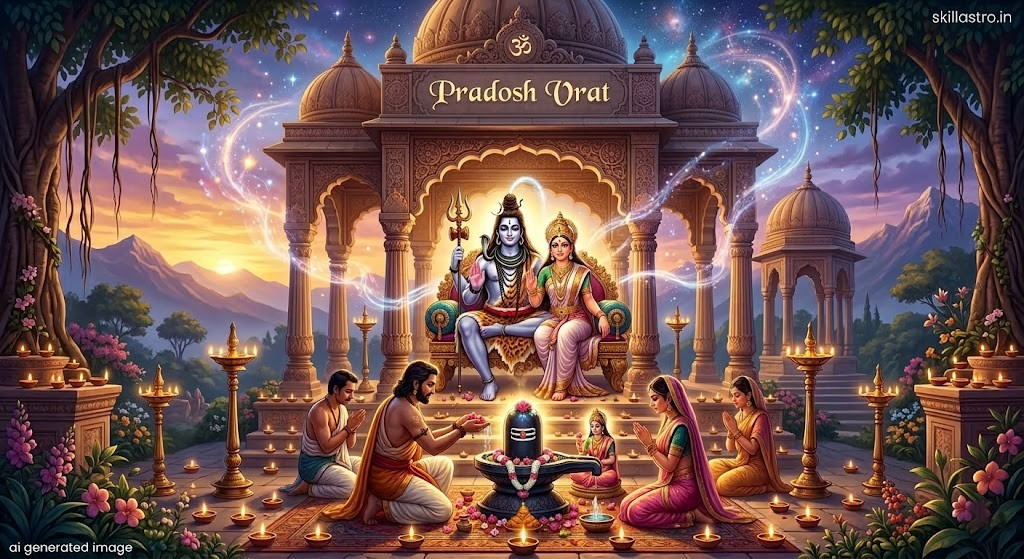
In Hinduism, Lord Shiva is called 'Ashutosh', which translates to the one who is pleased quickly. Although there are many fasts prescribed to please Mahadev, the 'Pradosh Vrat' holds the absolute highest position. The Pradosh Vrat is strictly observed on the Trayodashi Tithi (13th lunar day) of both the waxing and waning moon phases (Shukla and Krishna Paksha) of every month. It is deeply believed that at sunset on this specific day, Mahadev is in an extremely joyful and ecstatic mood. The devotee who sincerely worships him during that exact time has the sins of many lifetimes entirely washed away.
In this article, we will explore in detail when the Pradosh Vrat is, what its correct worship method entails, and the profound significance of Pradosh Kaal in our lives.
When is Pradosh Vrat? Date and Auspicious Timings
Pradosh Vrat occurs twice every single month. Its date is aligned with the Trayodashi Tithi, which is calculated based on the precise phases of the Moon.
The Immense Significance of Pradosh Kaal 'Pradosh Kaal' holds the maximum importance during the Pradosh Vrat. The period of approximately 2.5 hours immediately following sunset is known as the Pradosh Kaal. According to the sacred Shiva Purana, it is precisely at this time that Lord Shiva performs a joyful cosmic dance on Mount Kailash. Therefore, if the Trayodashi Tithi touches the Pradosh Kaal window, that particular day is universally considered the absolute best day to observe the fast.
Different Names of Pradosh According to the Day of the Week Depending on which day of the week the Pradosh Vrat falls on, its name and the specific astrological benefits it yields change accordingly:
Monday: Som Pradosh (Specifically for mental peace and resolving Chandra Dosha)
Tuesday: Bhaum Pradosh (For liberation from debts and improving health)
Saturday: Shani Pradosh (For the blessing of offspring and pacifying Shani Dosha)
Skill Astro - Fixed Centering Banner Talk to India's Best Astrologer at ₹1/min Only
Expert guidance for Career, Love & Marriage. Get accurate predictions instantly from verified Vedic Astrologers.
Chat Now »
Skill Astro - Fixed Centering Banner Talk to India's Best Astrologer at ₹1/min Only
Expert guidance for Career, Love & Marriage. Get accurate predictions instantly from verified Vedic Astrologers.
Chat Now »
The Correct Worship Method of Pradosh Vrat: The Divine Abhishek of Mahadev
The primary worship for the Pradosh Vrat is conducted in the evening, but the spiritual discipline of the fast begins right from the morning.
Morning Rituals Wake up before sunrise on the day of the fast, take a purifying bath, and wear clean clothes. After this, stand in front of Lord Shiva holding water and Akshat (unbroken rice) in your hand, and take a solemn vow (Sankalpa) for the fast: "O Mahadev, today I am observing the Pradosh Vrat for you, please accept my devotion."
Main Worship During Pradosh Kaal (Evening)
Take another bath before sunset in the evening and wear white clothing.
Purify your worship area by sprinkling Ganges water and establish the idol or picture of the Shiva family on a clean wooden pedestal (Chowki).
Abhishek: Perform the sacred Abhishek of the Shivling using Panchamrit (a mixture of milk, curd, ghee, honey, and Ganges water).
Offerings: Devotedly offer sandalwood paste, Akshat, Belpatra, Datura, Shami leaves, and fresh white flowers to Mahadev.
Incense and Lamp: Light a pure cow-ghee lamp and offer fragrant incense.
Katha: Read or listen to the Pradosh Vrat Katha with deep faith and devotion.
The Mythological Story of Pradosh Vrat (In Brief)
According to ancient mythological lore, there once lived a Brahmin widow who survived by begging for alms along with her young son. One day, she stumbled upon an injured prince lying on her path. The compassionate Brahmin woman brought him to her humble home and nursed him back to health. This Brahmin woman was a devout follower who regularly observed the Pradosh Vrat.
The Miracle of the Fast Eventually, the prince met a beautiful Gandharva princess, and they fell deeply in love. With the powerful military assistance of the Gandharvas, the prince successfully defeated his enemies and regained his lost kingdom. In gratitude, he appointed the Brahmin woman's son as his prime minister. All of this miraculous fortune was the direct cosmic result of the merit accumulated by the Brahmin woman's Pradosh Vrat. Since that time, it is firmly believed that whoever observes this fast will see Mahadev transform their poverty and sorrow into boundless happiness.
Special Significance and Benefits of Pradosh Vrat
In both astrology and ancient scriptures, this fast is equated to 'Kamadhenu' (the divine wish-fulfilling cow) because of its power to grant every sincere desire.
Destruction of Sins and Attainment of Salvation (Moksha) According to the Skanda Purana, any individual who worships Lord Shiva during the Pradosh Kaal attains spiritual merit equivalent to performing two grand Ashwamedha Yagyas. This fast completely liberates a person from unknowingly committed sins and awakens them to higher spiritual consciousness.
Pacification of Planetary Flaws (Graha Dosha) If you are suffering from afflictions of the Moon, Saturn, or Mars in your birth chart, the Pradosh Vrat acts as a miraculous panacea. Worshipping Mahadev on this day eliminates the adverse effects of negative planetary transits and brings lasting stability to your life.
Effective Astrological Remedies to be Performed During Pradosh Kaal
If you are currently struggling with a specific life problem, you must try these highly effective remedies on the day of Pradosh:
To Remove Financial Distress Apply a smooth paste of pure honey and ghee onto the Shivling during the Pradosh Kaal. Follow this by performing an Abhishek using fresh sugarcane juice. This powerful remedy opens up completely new avenues for the inflow of wealth.
For Rapid Progress in Job and Career Offer Shami leaves and Datura to the Shivling. Sit quietly and chant the "Om Namah Shivaya" mantra exactly 108 times using a Rudraksha mala.
For Liberation from Severe Diseases Offer fresh cow's milk over the Shivling while continuously reciting the Mahamrityunjaya Mantra. This provides miraculous relief even in the case of incurable or prolonged illnesses.
Special Mantras for Pradosh Vrat
Chanting the following mantras during your evening worship is considered highly fruitful and auspicious:
Shiva Mool Mantra: "Om Namah Shivaya"
Pradosh Mantra: "Om Hreem Namah Shivaya"
Forgiveness Prayer Mantra: "Karacharana Kritam Vaa Kaayajam Karmajam Vaa, Shravananayanajam Vaa Maanasam Vaaparadham. Vihitamavihitam Vaa Sarvametatkshamasva, Jaya Jaya Karunaabdhe Shrimaahadeva Shambho."
Frequently Asked Questions (FAQs)
Q1: Can we eat salt during the Pradosh Vrat?
Ans: Grains and regular table salt should be strictly avoided during the Pradosh Vrat. However, if it is absolutely necessary due to health reasons, you may use 'rock salt' (Sendha Namak) in your fruit diet only once, after completing the evening worship.
Q2: When should the Pradosh Vrat be broken (Parana)?
Ans: It is astrologically best to break the fast the following day, strictly after sunrise and before the arrival of the Chaturdashi Tithi.
Q3: Can women observe the Pradosh Vrat?
Ans: Yes, absolutely. Married women can observe this fast for unbroken good fortune and marital bliss, while unmarried girls can observe it with devotion to pray for a suitable and virtuous husband.
Conclusion
The Pradosh Vrat is far more than just a religious ritual; it is a profound medium for establishing a direct, spiritual connection with Mahadev. If this fast is observed with a deep understanding of the glory of Pradosh Kaal and the correct method of Shiva worship, even the most insurmountable obstacles in life are effortlessly averted. On the upcoming Pradosh Vrats in March 2026, you too should take refuge in Mahadev with your truest intentions. Lord Bholenath will undoubtedly bless your life with the ultimate boon of happiness, unshakeable peace, and immense prosperity.