
 Join WhatsApp Channel
Krishna Paksha Trayodashi: The Great Festival of Devotion to Mahadev and Purification of Karmas
In the Hindu calendar (Panchang), the 'Trayodashi' Tithi holds a highly important place, and when it comes to the Trayodashi of the Krishna Paksha (the waning phase of the moon), its spiritual value increases immensely. After Purnima (Full Moon), when the moon's phases begin to decrease, the incoming thirteenth day is called Krishna Paksha Trayodashi. It is primarily known as 'Pradosh'. According to the scriptures, this is a profound time to transition from darkness to light and to eradicate one's sufferings by taking refuge in Mahadev.
In this special article, we will describe in detail the glory of Krishna Paksha Trayodashi, its worship method (Puja Vidhi), and the special significance of Shiva worship on this day.
Religious and Astrological Significance of Krishna Paksha Trayodashi
The Trayodashi Tithi of the Krishna Paksha is considered to be fully imbued with the blessings of Lord Shiva.
The Secret of Pradosh Kaal
The most vital part of this date is the 'Pradosh Kaal' (the twilight period around sunset). It is a deep-rooted belief that during the Pradosh Kaal on Krishna Paksha Trayodashi, Mahadev is highly pleased and actively eliminates mental stress and negativity from the lives of his devotees.
Talk to India's Best Astrologer at ₹1/min Only
Expert guidance for Career, Love & Marriage. Get accurate predictions instantly from verified Vedic Astrologers.
Chat Now »
Talk to India's Best Astrologer at ₹1/min Only
Expert guidance for Career, Love & Marriage. Get accurate predictions instantly from verified Vedic Astrologers.
Chat Now »
Liberation from Shani and Chandra Dosha
From an astrological perspective, performing Shiva worship on Krishna Paksha Trayodashi significantly strengthens the position of the Moon. If an individual is undergoing Shani Dosha or Sade Sati in their birth chart, observing the fast and worship of Krishna Paksha Trayodashi grants them immense relief from their hardships.
Why is Shiva Worship Performed on Krishna Paksha Trayodashi?
Devotees often wonder why this specific date was chosen for Shiva worship. Here are the main reasons:
Balancing Cosmic Energy: During the Krishna Paksha, the Moon is weak, which directly affects our minds. Lord Shiva adorns the Moon on his forehead; therefore, worshipping him on this day stabilizes, calms, and empowers the mind.
Mythological Belief: During the churning of the ocean (Samudra Manthan), when the deadly poison emerged, Mahadev drank it to protect the universe. That specific date was Trayodashi. To express their gratitude, the gods praised him during the Pradosh Kaal, and since then, the tradition of Shiva worship on this day has seamlessly continued.
End of Sorrows: The word 'Pradosh' itself translates to the remover of flaws (Doshas). The Trayodashi of the Krishna Paksha holds the divine power to burn away our accumulated sins and karmic flaws.
Puja Vidhi for Krishna Paksha Trayodashi: How to Worship at Home?
A special Pradosh Vrat is observed on this date. Its accurate worship method is as follows:
Morning Sankalpa (Vow)
After bathing in the morning, fold your hands in front of Lord Shiva and take a solemn vow (Sankalpa) for the fast or special worship. Mentally chant 'Om Namah Shivaya' throughout the entire day.
Pradosh Kaal (Evening) Worship
Take a purifying bath again at sunset and wear clean white clothes.
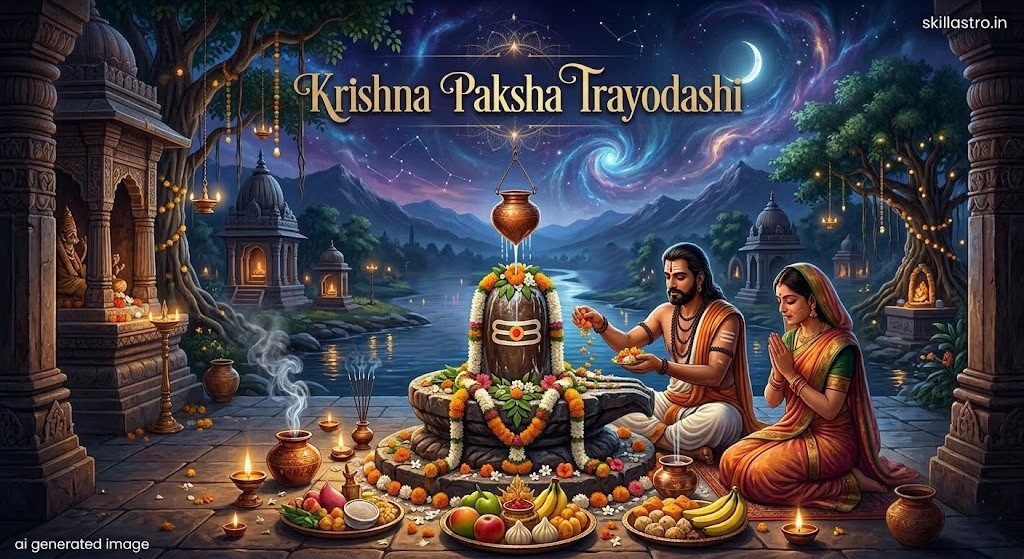
Perform Jalabhishek of the Shivling. Following this, perform a sacred Abhishek using milk, curd, ghee, honey, and Gangajal.
Devotedly offer Belpatra, Datura, Bhasma, and white sandalwood to Mahadev.
Light fragrant incense and a pure ghee lamp.
Read or listen to the Pradosh Vrat Katha with complete faith.
Finally, perform the Aarti with camphor and distribute the Prasad.
Special Acts to be Performed on Krishna Paksha Trayodashi
Deepdaan (Lighting Lamps): Lighting a lamp at a Shiva temple or the main entrance of your house in the evening on this day effectively drives away poverty and invites prosperity.
Rudrabhishek: If possible, organizing a Rudrabhishek on this day is considered highly auspicious and transformative.
Charity (Daan-Punya): Donating black sesame seeds, white clothes, or grains is considered especially meritorious on this specific date.
Powerful Shiva Mantras
Chanting these powerful mantras during your worship empowers your prayers exponentially:
Root Mantra: "Om Namah Shivaya"
Shiva Dhyan Mantra: "Dhyayennityam Mahesham Rajatagirinibham Charuchandravatamsam."
Panchakshari Stotra: "Nagendraharaya Trilochanaya Bhasmangaragaya Maheshwaraya."
Frequently Asked Questions (FAQs)
What is the difference between Krishna Paksha and Shukla Paksha Trayodashi?
Shukla Paksha Trayodashi symbolizes completeness and material growth, whereas Krishna Paksha Trayodashi is considered supreme for detachment, spiritual purification, and the removal of karmic flaws (Doshas).
Should one only consume a fruit diet (Phalahar) on this day?
Yes, on the day of Pradosh Vrat or the special worship of Trayodashi, giving up grains and strictly consuming a fruit-based diet is considered optimal for spiritual benefits.
What should not be done on Krishna Paksha Trayodashi?
On this day, one should strictly stay away from Tamasic food (onion, garlic, meat) and refrain from speaking harsh or hurtful words to anyone.
Conclusion
Krishna Paksha Trayodashi is a profound date for self-reflection and total surrender to Mahadev. It beautifully teaches us that no matter how much darkness (Krishna Paksha) surrounds our life, if we take refuge in Shiva, absolute peace and welfare are certain. Even a small Deepdaan performed during the Pradosh Kaal on this date possesses the divine power to illuminate your entire destiny.